More Herbal Remedies for Insomnia: Turn Off Your Mind, Relax, and Float to Sleep
Herbal remedies for insomnia are being used by millions of Americans (as well as by millions of people around the world).
How do we know this about Americans? Surveys.
A 2002 National Health Interview Survey asked people about their
use of alternative medicines for insomnia. About 1.6 million U.S. adults
who bothered to participate in the survey said they were using either
herbal remedies for insomnia,
or melatonin and related dietary supplements.

Most of those people said they found that insomnia herbal remedies and other natural therapies were helpful.
It's not surprising.
Because even though it's difficult to find many really good studies on herbal remedies for insomnia, there is enough information that shows herbal remedies just might help with your sleep deprivation.
Take lemon balm as an example
Lemon balm, also known as sweet mary, melissa, balm, or by it's scientific name, melissa officinalis, is a member of the mint family. The leaves have a mild lemon taste and fragrance.
Melissa officinalis has been used as a medicinal herb since the Middle Ages. Here's what centuries of use, as well as the scientific studies, show in terms of the effects lemon balm has as a remedy for insomnia:
- It works as a mild sedative that promotes sleep
- It's used as a stomach soother to relieve indigestion. Eases
the discomfort of gas and bloating (those two can sure keep a person up
at night, as in, "I can't believe I ate the whole thing.")
- Produces calmness to counteract jittery nerves, stress, and
anxiety. Reducing stress and anxiety can help fight hypertension (high
blood pressure).
- Is excellent for boosting mood
- Has a relaxing effect on the mind. Turning off your mind makes falling asleep easier
- Improves both quality and quantity of sleep for not only good
sleepers but for poor sleepers too
- And lemon balm can be taken with other herbal remedies for
insomnia such as valerian root extract, passionflower, and lavender.
- It's also interesting to note that lemon balm has been shown to improve memory performance in healthy individuals.
- And because of its mild sedative effect, it has been shown to have a beneficial effect for the agitation that accompanies severe dementia, including Alzheimer's disease. Dr. David Kennedy has even stated that lemon balm may have a future role as a treatment for dementia.
Lemon balm is a powerful, remarkable, wonderful herb.
Two Herbal Health Tips
- Always follow the dosage recommendation from the manufacturer.
- Always tell your doctor what herbs and supplements you are taking.
Is melissa a safe sedative herb?
Yes. Lemon balm is considered GRAS by the U.S. FDA, meaning Generally Recognized As Safe.
In Germany, lemon balm is endorsed as a sedative by Commission E. Commission E is a committee of experts that reports on the safety and effectiveness of herbs and herbal combinations.
Melissa can even be used up to four months without problem. But if you're using melissa or other herbal remedies for insomnia...and nothing is working after a month or two...you've got deeper issues you need to be discussing with your health care provider.
How to take lemon balm to help you fall asleep
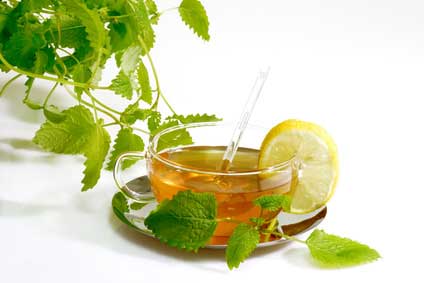
As a remedy for insomnia, you might want to first try this balm by drinking it in tea. It has a pleasant taste. Sip on it after dinner or maybe an hour or so before going to bed.
Use anywhere from 1/4 to three teaspoons of the dried lemon balm leaves for each cup of boiling water. You could start with a lower amount first and see how it effects you. Steep for 5 minutes, or longer if you prefer. You can drink the tea up to 4 times daily.
Of course, too much liquid before bedtime can lead to a situation where you have to get up and pee in the middle of the night. Sort of defeats the purpose of herbal tea to help treat insomnia.
So if that's the case with you, here's...
The best way to take lemon balm
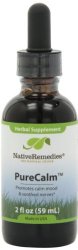
Perhaps the best way to use it as one of the more effective herbal remedies for insomnia is to take it in capsules or tinctures that also contain other herbs for sleep. These herbs in formula combinations may help you get a longer and deeper sleep.
One excellent tincture I have found over at Amazon.com is Pure Calm. (Link opens a new window.)
Pure Calm is a vegetarian formula that contains lemon balm, passionflower, and lavender. These three herbs work well together to calm the mind and relieve anxiety.
This in turn helps to promote sleep. (Click the bottle image to the right to see this excellent supplement.)
Pure Calm:
- Promotes a calming mood
- Soothes nerves
- Eases emotions when you're feeling pressured
- Quiets the symptoms of stress
- Supports the normal functioning of your brain and nervous system
- And it's easy to take and is fast acting.
Does it work for everyone? No way. Nothing does.
When you try it, you may find it’s one of the best things you’ve ever taken. Then again, it might do nothing for you. That’s how herbs and supplements are.
Here's a 100% organic lemon balm extract
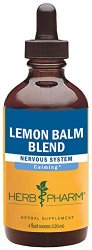
If you want a 100% organic lemon balm blend of leaf and flowering tops, Herb Pharm makes a very good lemon balm liquid extract. This product is also over at Amazon.com.
I’m sending you to the 4 ounce bottle size. However, they also have a one ounce size. The four ounce size will last upwards of a month, depending on how many drops you want to use daily.
As with Pure Calm, Herb Pharm lemon balm works to improve mood, promote calmness, and relieve stress.
Another way to use these herbal remedies for insomnia
You could also take capsules that contain only lemon balm to see if that works for you, although it may be less effective by itself.
However, there was one small study that showed that a 600 mg dose of lemon balm by itself did increase calmness.
Essential oil of melissa officinalis can also be inhaled to counteract restlessness and produce a calming effect.
And here's something else that's interesting about lemon balm if you suffer from cold sores, as I sometimes do. Researchers have discovered that lemon balm has antiviral properties and can be used as an ointment to speed up the healing of cold sores.
Herb Pharm that I mentioned earlier works well on stopping cold sores if you use it as soon as you feel that tingling feeling on your lips.
Next in this series on natural sleep aids and herbal remedies for insomnia, we'll look at hops (see part 3 below). Yes, it's the stuff in beer, but no, having a nightcap before sleeping is a bad idea. It can lead to sleep maintenance insomnia.
Here are more articles you will find helpful
Part 1 Herbal Sleep Aids: Valerian Root
Part 3 Herbs for Sleep: Hops
Part 4 Sleep Aid Herbs: Secrets to Sleeping Well Using Passionflower
Part 5: An Herbal Sleep Remedy for Egyptian Mummies?
Part 6 of Herbal Sleep Remedies: Chamomile
Return to Sleep Passport Home Page
References for Herbal Remedies for Insomnia
- Modulation of Mood and Cognitive Performance Following Acute Administration of Single Doses of Melissa Officinalis (Lemon Balm) with Human CNS Nicotinic and Muscarinic Receptor-Binding Properties. Neuropsychopharmacology (2003) 28, 1871–1881, David O. Kennedy, et al
- Attenuation of Laboratory-Induced Stress in Humans After Acute Administration of Melissa officinalis (Lemon Balm). Psychosomatic Medicine 66:607–613 (2004)
- Pilot trial of Melissa officinalis L. leaf extract in the treatment of volunteers suffering from mild-to-moderate anxiety disorders and sleep disturbances. Med J Nutrition Metab. 2011 December; 4(3): 211–218.
- Lemon balm. University of Maryland Medical Center.
Popular Sleep Passport Pages



What's New


-
Two Ways to Keep Your Brain and Memory Sharp
If you’re concerned about forgetfulness and your mind not being as sharp as you think it should be, I have two suggestions: 1. Get more sleep. 2. Challenge your brain and memory. Not getting enough sl… -
Discover The Best Ergonomic Chair For Back Pain
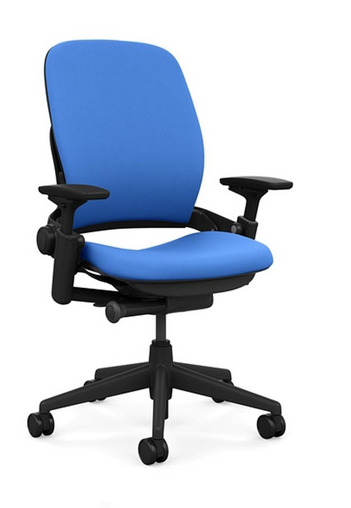 The best ergonomic chair reduces back pain, enhances productivity, lowers business costs, and increases company profits. Click here to see the best of the best.
 -
Putting mattresses with memory foam
on a box springWould it be a good idea to put my memory foam mattress on a box spring? I haven't found an answer for this question anywhere I have looked. Answer by -
How To Fall Asleep Naturally: Your 14 Part Checklist
 Knowing how to fall asleep can have a dramatic impact on your health, finances, and mood. So before you reach for sleep medications, check out these 14 tips to fall asleep first.
 -
Best Bed For Back Pain: Here Are 3 Top Choices
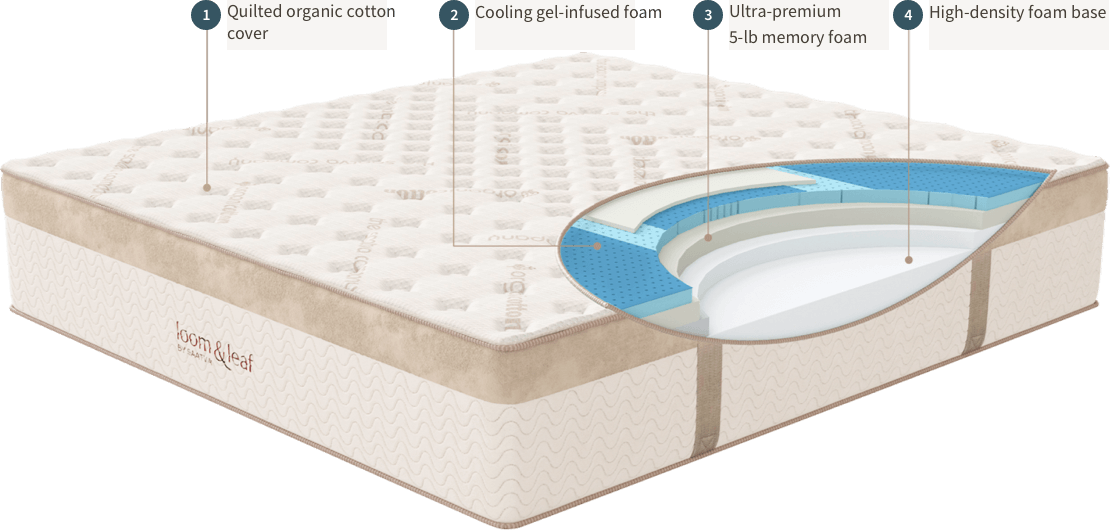 Medical research has shown the best bed for back pain is a memory foam or latex mattress. Click here for three top places online to get the quality you deserve.
Sleep Passport may earn an affiliate fee when you purchase through links on this page.
